Chefchaouen Travel Guide: Morocco’s Blue City
Key takeaways
- Chefchaouen is a mountain town in Morocco's Rif range, famous for a medina washed almost entirely in shades of blue.
- Two days is enough to see the main sights, with a half day for the Spanish Mosque viewpoint and the surrounding hills.
- There is no train to Chefchaouen, so most visitors arrive by road from Tangier, Fes, or on a longer transfer from Marrakech.
- The best light for photographing the blue alleys is early morning, before day-trip crowds fill the narrow lanes.
Chefchaouen is a small mountain town in northern Morocco where almost every wall, step, and doorway is painted a shade of blue. This Chefchaouen blue city guide covers what to see, the best spots to photograph, how to get there from Tangier, Fes, and Marrakech, and how long to stay so you leave with the trip you actually wanted.
Set in the Rif Mountains, the town rewards slow walking more than a tight sightseeing checklist. The medina is compact, the pace is gentle, and the scenery around it is open and green for much of the year.
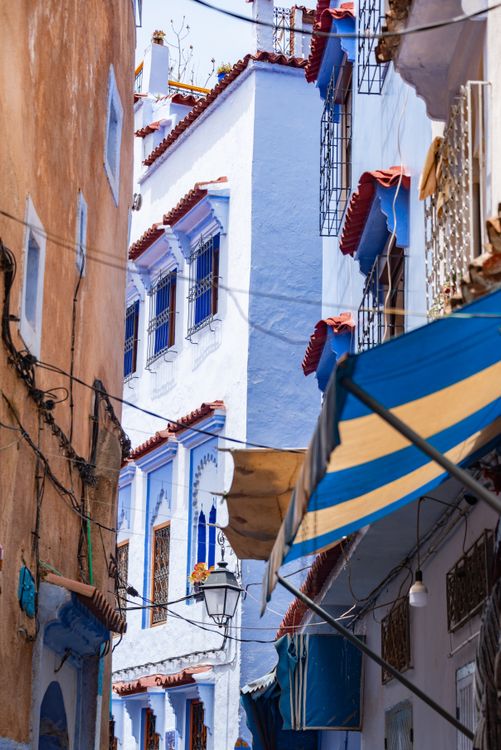
Why the Chefchaouen blue city medina is so photogenic
The appeal comes down to scale and color working together. The old town is a tight grid of lanes, staircases, and small squares, and nearly all of it carries one dominant palette. Blue washes the walls, the steps, the planters, and often the doors, so wherever you point a camera the frame already has a theme.
No single explanation for the blue is confirmed. The most repeated account ties the color to the town's historic Jewish community and a tradition of blue as a spiritual color. Other explanations are more practical: that lighter blue tones help keep interiors cool, or that the color discourages insects. Locals will give you different versions depending on who you ask, and that uncertainty is part of the charm.
What makes it work for photos is the layering. Potted plants, hanging rugs, carved wooden doors, and worn stone steps break up the blue and add texture, so images feel composed rather than flat.
Top things to see and do in and around the old town
Most of what you will remember happens on foot inside the medina, with a few anchor points worth planning around.
- Plaza Uta el-Hammam. The main square sits at the heart of the old town. It is the natural place to start, with cafes, a slower tempo in the morning, and easy access to the lanes that climb uphill from there.
- The Kasbah. A walled fortress on the square, with gardens, a small museum, and a tower you can climb for a view over the rooftops.
- The Grand Mosque. Next to the kasbah, notable for its octagonal minaret. The interior is reserved for worshippers, but the exterior and setting are worth a look.
- Ras El Maa. A spring and small waterfall at the edge of the medina where the lanes meet the hillside. Locals gather and wash here, and the sound of running water is a pleasant change from the stone streets.
- The artisan workshops. Chefchaouen is known for woven goods, wool blankets, and leatherwork. Buying directly from small shops is part of the experience.
For a wider sense of how a Moroccan medina works, it helps to have walked one of the bigger cities first. If you are building a full itinerary, our guide to the best things to do in Marrakech pairs well with a quieter stop like this one.
Best photo spots and walking routes through the kasbah
The best light for the blue lanes is early morning, before day-trip buses arrive and before the sun climbs high enough to flatten the shadows. Aim to be out shortly after sunrise if photography is a priority.
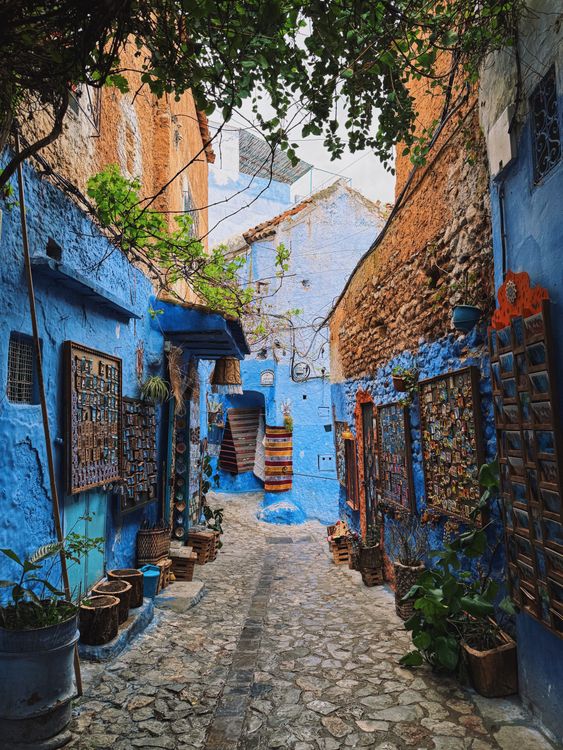
A simple route that covers the highlights:
- Start at Plaza Uta el-Hammam and photograph the kasbah walls while the square is still quiet.
- Climb the lanes north and east of the square. This is where the densest, most colorful alleys sit, with flowerpots and painted staircases around most corners.
- Work toward Ras El Maa at the medina's edge, then follow the path uphill.
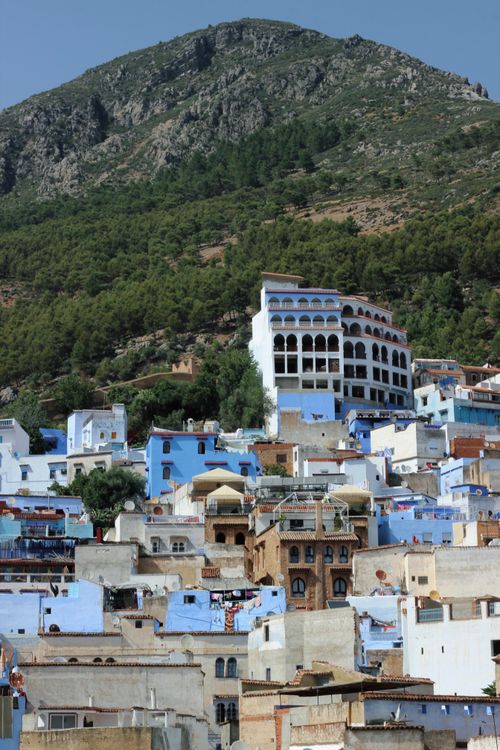
- Finish at the Spanish Mosque viewpoint. The short walk up the hill east of town gives the classic wide shot of the whole blue medina set against the mountains. Late afternoon light here is excellent for the view back over the rooftops.
A few practical notes. Ask before photographing people, especially in doorways and workshops. Some residents post small signs or quietly decline, and a moment of courtesy keeps the town friendly to visitors. Comfortable shoes matter more than you expect, because the medina is built on a slope and much of it is stairs.
How to reach Chefchaouen from Marrakech, Fes, and Tangier
There is no train station in Chefchaouen, so every arrival is by road. Your starting city decides how long the journey takes and how you should plan it.
- From Tangier. This is the shortest approach and the easiest base for a first visit. The drive heads south into the Rif Mountains and takes roughly a couple of hours, which makes an overnight trip simple.
- From Fes. A popular pairing, since both towns sit in the north. Expect several hours on the road through hilly terrain. Many travelers visit Fes and Chefchaouen back to back rather than returning to one base.
- From Marrakech. Marrakech is far to the south, so this is a long journey of most of a day in each direction. A same-day trip is not realistic. Treat Chefchaouen as part of a longer northern loop, or connect it to a Fes or Tangier leg rather than driving up and back from Marrakech.
Shared grand taxis and intercity buses serve the town, but they run on their own schedules and can mean changes along the way. A private transfer removes the connections and lets you stop for photos in the mountains. Tinissatravel arranges private chauffeur transfers across Morocco, which is the simplest way to reach Chefchaouen comfortably if you are coming from the south or linking several cities. If your trip starts with a flight into Marrakech, our private Marrakech airport transfer guide explains how the pickup and onward legs work.
Where to stay and the ideal length of visit
Two days is the sweet spot for most visitors. One full day covers the medina, the kasbah, and the Spanish Mosque viewpoint. A second day gives you unhurried morning light for photos, time for a short hike in the surrounding hills, and the slower pace the town is built for.
For where to sleep, staying inside or just beside the medina is worth it. A room in the old town puts you steps from the blue lanes at dawn and dusk, when the streets are quietest and the light is best. Options range from small family-run guesthouses, often called riads or dars, to simple hotels on the edge of the old town with easier parking. Edge-of-medina stays are useful if you arrive by car, since vehicles cannot enter most of the narrow lanes.
If Chefchaouen is one stop on a wider Morocco trip, it slots naturally into a northern route and contrasts nicely with the desert south. Travelers who want both the blue mountains and the dunes often add a southern leg such as our 3-day Sahara desert tour from Marrakech to Merzouga to round out the country.
To make the most of a short stay, book a room inside the medina and set an early alarm on your first morning. The quiet blue lanes at sunrise are the version of Chefchaouen most people travel here to see, and they only last until the day crowds arrive.
Frequently asked questions
Is Chefchaouen worth visiting?
Yes, if you enjoy walkable old towns, mountain scenery, and relaxed pacing. The blue medina is compact and genuinely photogenic, and the slower rhythm is a welcome contrast to larger cities like Marrakech or Fes.
How many days do you need in Chefchaouen?
One full day covers the medina and the main viewpoint. Two days lets you slow down, hike nearby trails, and photograph the blue lanes in good morning light without rushing.
Why are the buildings in Chefchaouen painted blue?
No single reason is confirmed. The most repeated explanation links the blue to the town's Jewish community, while other accounts point to keeping interiors cool or deterring insects.
Can you do Chefchaouen as a day trip from Marrakech?
It is not practical. Marrakech is far to the south, so a day trip means many hours of driving each way. Chefchaouen pairs far better with Tangier or Fes, or as a stop on a longer northern tour.