Marrakech Airport Transfer Private: Full Guide
Key takeaways
- Pre-booking a private airport transfer locks in a fixed fare, so there is no haggling at the taxi rank after a long flight.
- A private service tracks your flight and adjusts the pickup time automatically, which covers early landings and delays at no extra cost.
- Vehicle choice matters: a sedan suits couples, a minivan fits families with luggage, and a minibus handles groups of six or more.
- Fixed fares, luggage help and free child seats are standard with a booked private transfer, unlike the taxi rank where extras are negotiated.
- A named driver waiting in arrivals removes the biggest friction point of landing in an unfamiliar country at night.
Booking a Marrakech airport transfer private service means a named driver meets you in arrivals and takes you straight to your riad for a price you already agreed. You skip the taxi rank, the fare negotiation and the uncertainty of arriving in a new country, which is exactly what most travellers want after a long flight into Menara.
This guide walks through why pre-booking works, what happens on arrival, how to pick the right vehicle, what a fixed fare actually covers, and how a private transfer compares to the taxi rank and ride apps. The goal is simple: help you land in Marrakech and get where you are going without friction.
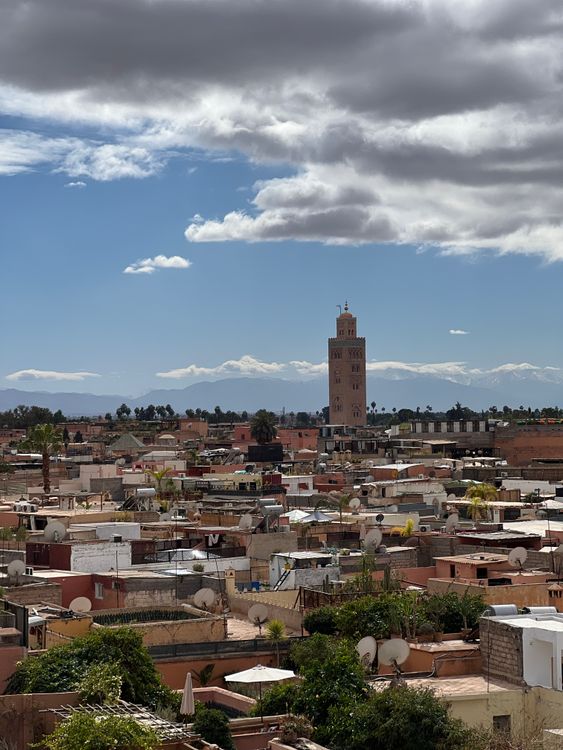
Why pre-booking a private airport transfer saves time and hassle
Marrakech is busier than it has ever been. Morocco recorded 19.8 million tourist arrivals in 2025, up 14% on 2024, according to the African Travel and Tourism Association. More visitors means more pressure at the airport taxi rank, longer queues at peak times, and more room for confusion over fares.
Pre-booking removes that pressure. When you reserve a private transfer, three things are settled before you even board your flight:
- The price is fixed and confirmed, so there is nothing to negotiate when you are tired and jet-lagged.
- A specific driver is assigned to your arrival, so you are not competing for the next available car.
- The route and drop-off point are known in advance, which matters in the medina where many riads sit down narrow lanes a car cannot enter.
That last point is easy to underestimate. A driver who already knows your riad will take you to the nearest vehicle-accessible point and often help with the final walk in. A rank taxi driver meeting your address for the first time may drop you at the wrong gate.
For first-time visitors especially, the value is in the certainty. You spend the energy you saved on your actual trip instead of on logistics.
Meet-and-greet, flight tracking and 24/7 arrivals at Menara Airport
The practical heart of a private transfer is the meet-and-greet. Your driver waits inside the arrivals hall at Menara Airport holding a sign with your name, usually just past baggage claim and customs. You do not walk the length of the taxi rank or explain your destination to a stranger outside.
Flight tracking is what makes this reliable. A booked private service monitors your flight number, so if you land early the driver is already there, and if you are delayed the pickup time shifts automatically. You are not paying for waiting time you did not cause, and you are not stranded because a car left on a fixed schedule.
Menara handles flights around the clock, and arrivals do not politely stop at a convenient hour. A 2 a.m. landing is far easier when a known driver is waiting than when you are trying to wake up a taxi queue or find a working app in a quiet terminal. Tinissa Travel runs transfers on a 24/7 basis for exactly this reason, so a red-eye arrival gets the same treatment as a midday one.
A few things worth knowing about Menara arrivals:
- The airport sits only a short drive from the city centre and most riads, so transfer times are usually brief even in traffic.
- Signage is in Arabic, French and English, but a driver waiting for you removes the need to decode any of it.
- If your group is splitting up or you have a connecting onward trip, confirm the drop-off details when you book so there are no surprises.
Vehicle options for couples, families and larger groups
Private transfers are priced by vehicle, not by head, so the right choice is the one that fits your party and luggage comfortably. Choosing well is the difference between an easy ride and a cramped one with bags on your lap.

Couples and solo travellers
A standard sedan is usually the sensible pick for one or two people with normal luggage. It is the most economical private option and still gives you the fixed fare, the meet-and-greet and the direct route. If you are travelling light, there is rarely a reason to size up.
Families
Families need room for people and bags at the same time, which a sedan can struggle with once you add a couple of large cases and a child seat. A minivan or MPV handles four to five passengers with luggage far more comfortably. This is also where child seats matter, and a booked transfer lets you request them in advance rather than hoping one appears.
Larger groups
For six or more travellers, a minibus keeps everyone together in one vehicle at one agreed price. Splitting a big group across two rank taxis tends to cost more in total and separates the party, which is awkward when half of you reach the riad before the other half. One minibus and one driver is simpler and usually cheaper per person.
If your Marrakech trip includes onward travel, the same vehicle logic applies to longer routes. Our Marrakech to Essaouira transfer guide covers how private cars work on the coastal run.
What's included: fixed fares, luggage help and child seats
The word "included" is where a private transfer separates itself from a casual taxi. With a booked service, the quote you accept is the quote you pay. There is no late-night surcharge sprung on you at the destination and no extra charge for the bags in the boot.
A properly specified private transfer covers:
- A fixed, all-in fare. The price is agreed when you book and does not change based on traffic, time of day or how many questions you ask.
- Luggage handling. Your driver helps load and unload, which is a genuine relief after a long-haul flight with heavy cases.
- Child and booster seats. These can be requested in advance and fitted before pickup. With Tinissa Travel they are provided rather than billed as an add-on.
- Direct drop-off. You go to your accommodation, not to a generic central point where you then arrange the last leg yourself.
The fixed-fare point deserves weight because airport pricing is where visitors most often feel caught out. When the fare is locked in writing before you land, the number cannot drift upward on arrival. That predictability is a large part of what you are paying for.
How Tinissa Travel compares to taxi ranks and ride apps
The honest question is whether a private transfer is worth it over just grabbing a taxi or opening an app. For arrivals specifically, the case is strong.
Against the taxi rank: Airport taxis can be metered or negotiated, and for first-time visitors the negotiation rarely goes in your favour. Posted rank fares to the city centre also typically rise after about 8 p.m., so a late arrival often pays a night rate on top. A private transfer removes the negotiation entirely because the price was set before you flew. You also get a named driver waiting inside, rather than whoever is next in the queue outside.
Against ride apps: Ride-hailing coverage in Marrakech is patchy, pickup rules at the airport can be awkward, and surge pricing at busy arrival times erases the savings. An app also cannot track your flight or hold a driver for a delayed landing. A booked private transfer does both by default.
Where a private service wins clearly:
- Price certainty before you travel, not after you land.
- A driver who tracks your flight and waits, including at antisocial hours.
- Someone who already knows your riad and the nearest access point in the medina.
- Fixed inclusions like luggage help and child seats, not negotiated extras.
Where a taxi can still make sense is a short, daytime hop once you are already in the city and confident about local fares. For the airport run itself, especially on arrival with luggage and no bearings, the private transfer is the lower-stress choice.
Getting your arrival right
Book your transfer at the same time as your flight and accommodation, while the details are in front of you. Confirm your flight number, passenger count, luggage, any child seats and the exact riad name, then arrive knowing a driver will be holding a sign with your name. That one step turns the most stressful part of a trip into the easiest.
Once you are settled, Marrakech opens up quickly, and a half-day escape into the mountains is well within reach. Our Ourika Valley day trip from Marrakech is a natural first excursion once the airport is behind you.
Frequently asked questions
How much does a private airport transfer from Marrakech cost?
Private transfers are priced per vehicle, not per person, and the fare is confirmed when you book. A couple and a family of four pay the same price for the same vehicle class, so groups usually get the best value.
Will my driver wait if my flight is delayed?
Yes. A booked private transfer tracks your flight number and adjusts the pickup time to the actual landing, so a delay or an early arrival does not cost you the ride or add fees.
Where do I meet the driver at Menara Airport?
Your driver waits in the arrivals hall holding a sign with your name, usually just past customs and baggage claim. You do not search the taxi rank or queue outside.
Can I book a child seat for a private transfer?
Yes. Child and booster seats can be requested when you book and are fitted before pickup. With Tinissa Travel they are included rather than charged as an add-on.
Is a private transfer better than a taxi at the airport?
For arrivals, usually yes. A private transfer gives you a fixed price agreed in advance, a named driver, and no negotiation, which a metered or rank taxi cannot guarantee after an international flight.