Chefchaouen Travel Guide: Morocco’s Blue City
Key takeaways
- Chefchaouen is a mountain town in Morocco's Rif range, famous for a medina washed almost entirely in shades of blue.
- Two days is enough to see the main sights, with a half day for the Spanish Mosque viewpoint and the surrounding hills.
- There is no train to Chefchaouen, so most visitors arrive by road from Tangier, Fes, or on a longer transfer from Marrakech.
- The best light for photographing the blue alleys is early morning, before day-trip crowds fill the narrow lanes.
Chefchaouen is a small mountain town in northern Morocco where almost every wall, step, and doorway is painted a shade of blue. This Chefchaouen blue city guide covers what to see, the best spots to photograph, how to get there from Tangier, Fes, and Marrakech, and how long to stay so you leave with the trip you actually wanted.
Set in the Rif Mountains, the town rewards slow walking more than a tight sightseeing checklist. The medina is compact, the pace is gentle, and the scenery around it is open and green for much of the year.
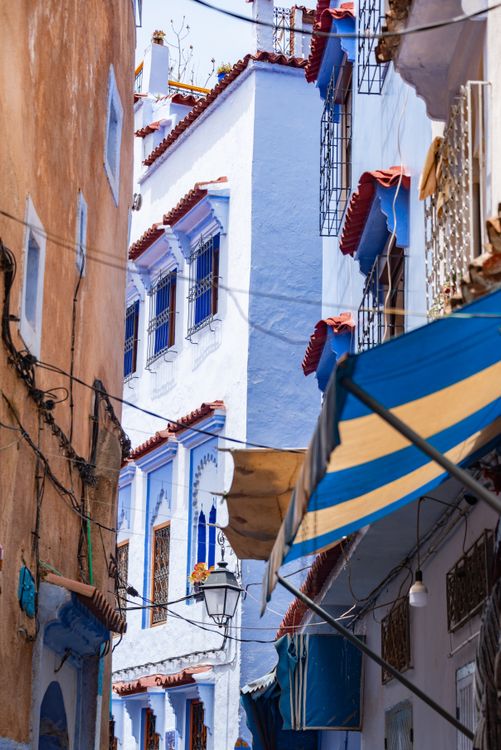
Why the Chefchaouen blue city medina is so photogenic
The appeal comes down to scale and color working together. The old town is a tight grid of lanes, staircases, and small squares, and nearly all of it carries one dominant palette. Blue washes the walls, the steps, the planters, and often the doors, so wherever you point a camera the frame already has a theme.
No single explanation for the blue is confirmed. The most repeated account ties the color to the town's historic Jewish community and a tradition of blue as a spiritual color. Other explanations are more practical: that lighter blue tones help keep interiors cool, or that the color discourages insects. Locals will give you different versions depending on who you ask, and that uncertainty is part of the charm.
What makes it work for photos is the layering. Potted plants, hanging rugs, carved wooden doors, and worn stone steps break up the blue and add texture, so images feel composed rather than flat.
Top things to see and do in and around the old town
Most of what you will remember happens on foot inside the medina, with a few anchor points worth planning around.
- Plaza Uta el-Hammam. The main square sits at the heart of the old town. It is the natural place to start, with cafes, a slower tempo in the morning, and easy access to the lanes that climb uphill from there.
- The Kasbah. A walled fortress on the square, with gardens, a small museum, and a tower you can climb for a view over the rooftops.
- The Grand Mosque. Next to the kasbah, notable for its octagonal minaret. The interior is reserved for worshippers, but the exterior and setting are worth a look.
- Ras El Maa. A spring and small waterfall at the edge of the medina where the lanes meet the hillside. Locals gather and wash here, and the sound of running water is a pleasant change from the stone streets.
- The artisan workshops. Chefchaouen is known for woven goods, wool blankets, and leatherwork. Buying directly from small shops is part of the experience.
For a wider sense of how a Moroccan medina works, it helps to have walked one of the bigger cities first. If you are building a full itinerary, our guide to the best things to do in Marrakech pairs well with a quieter stop like this one.
Best photo spots and walking routes through the kasbah
The best light for the blue lanes is early morning, before day-trip buses arrive and before the sun climbs high enough to flatten the shadows. Aim to be out shortly after sunrise if photography is a priority.
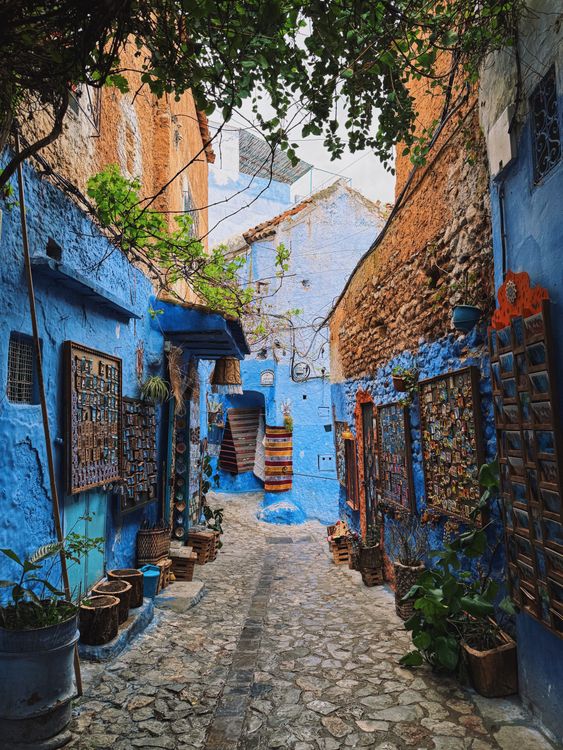
A simple route that covers the highlights:
- Start at Plaza Uta el-Hammam and photograph the kasbah walls while the square is still quiet.
- Climb the lanes north and east of the square. This is where the densest, most colorful alleys sit, with flowerpots and painted staircases around most corners.
- Work toward Ras El Maa at the medina's edge, then follow the path uphill.
- Finish at the Spanish Mosque viewpoint. The short walk up the hill east of town gives the classic wide shot of the whole blue medina set against the mountains. Late afternoon light here is excellent for the view back over the rooftops.
A few practical notes. Ask before photographing people, especially in doorways and workshops. Some residents post small signs or quietly decline, and a moment of courtesy keeps the town friendly to visitors. Comfortable shoes matter more than you expect, because the medina is built on a slope and much of it is stairs.
How to reach Chefchaouen from Marrakech, Fes, and Tangier
There is no train station in Chefchaouen, so every arrival is by road. Your starting city decides how long the journey takes and how you should plan it.
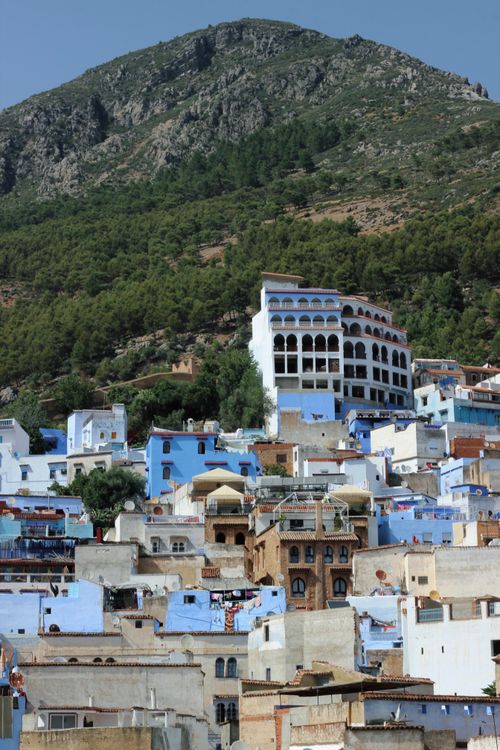
- From Tangier. This is the shortest approach and the easiest base for a first visit. The drive heads south into the Rif Mountains and takes roughly a couple of hours, which makes an overnight trip simple.
- From Fes. A popular pairing, since both towns sit in the north. Expect several hours on the road through hilly terrain. Many travelers visit Fes and Chefchaouen back to back rather than returning to one base.
- From Marrakech. Marrakech is far to the south, so this is a long journey of most of a day in each direction. A same-day trip is not realistic. Treat Chefchaouen as part of a longer northern loop, or connect it to a Fes or Tangier leg rather than driving up and back from Marrakech.
Shared grand taxis and intercity buses serve the town, but they run on their own schedules and can mean changes along the way. A private transfer removes the connections and lets you stop for photos in the mountains. Tinissatravel arranges private chauffeur transfers across Morocco, which is the simplest way to reach Chefchaouen comfortably if you are coming from the south or linking several cities. If your trip starts with a flight into Marrakech, our private Marrakech airport transfer guide explains how the pickup and onward legs work.
Where to stay and the ideal length of visit
Two days is the sweet spot for most visitors. One full day covers the medina, the kasbah, and the Spanish Mosque viewpoint. A second day gives you unhurried morning light for photos, time for a short hike in the surrounding hills, and the slower pace the town is built for.
For where to sleep, staying inside or just beside the medina is worth it. A room in the old town puts you steps from the blue lanes at dawn and dusk, when the streets are quietest and the light is best. Options range from small family-run guesthouses, often called riads or dars, to simple hotels on the edge of the old town with easier parking. Edge-of-medina stays are useful if you arrive by car, since vehicles cannot enter most of the narrow lanes.
If Chefchaouen is one stop on a wider Morocco trip, it slots naturally into a northern route and contrasts nicely with the desert south. Travelers who want both the blue mountains and the dunes often add a southern leg such as our 3-day Sahara desert tour from Marrakech to Merzouga to round out the country.
To make the most of a short stay, book a room inside the medina and set an early alarm on your first morning. The quiet blue lanes at sunrise are the version of Chefchaouen most people travel here to see, and they only last until the day crowds arrive.
Frequently asked questions
Is Chefchaouen worth visiting?
Yes, if you enjoy walkable old towns, mountain scenery, and relaxed pacing. The blue medina is compact and genuinely photogenic, and the slower rhythm is a welcome contrast to larger cities like Marrakech or Fes.
How many days do you need in Chefchaouen?
One full day covers the medina and the main viewpoint. Two days lets you slow down, hike nearby trails, and photograph the blue lanes in good morning light without rushing.
Why are the buildings in Chefchaouen painted blue?
No single reason is confirmed. The most repeated explanation links the blue to the town's Jewish community, while other accounts point to keeping interiors cool or deterring insects.
Can you do Chefchaouen as a day trip from Marrakech?
It is not practical. Marrakech is far to the south, so a day trip means many hours of driving each way. Chefchaouen pairs far better with Tangier or Fes, or as a stop on a longer northern tour.
3-Day Sahara Desert Tour from Marrakech to Merzouga
Key takeaways
- A 3-day Sahara desert tour from Marrakech to Merzouga covers roughly 560 km each way, with 8 to 10 hours of driving on the first day through the High Atlas.
- The classic route passes the Tizi n'Tichka pass, Ait-Ben-Haddou, Ouarzazate, and the Dades and Todra gorges before reaching the Erg Chebbi dunes.
- Spring and autumn are the most comfortable seasons for camel trekking; summer days are extremely hot and winter nights can drop near freezing.
- A private tour lets you set the pace, break the long first-day drive, and stay overnight in a desert camp beneath the stars at Erg Chebbi.
A Sahara desert tour from Marrakech to Merzouga takes three days: one long day crossing the High Atlas to reach the dunes, a night in a desert camp with a sunset camel trek, and a day driving back. The journey covers roughly 560 km each way, so expect eight to ten hours on the road the first day, broken up by stops at mountain passes, a UNESCO kasbah, and two dramatic gorges.
This guide walks through the full itinerary, explains what a private tour includes, and covers the practical questions travelers ask most: what to pack, the best season to travel, and how long the drive really takes.
Why a Sahara desert tour from Marrakech needs three days
Merzouga sits at the edge of the Erg Chebbi dune field in southeastern Morocco, near the Algerian border. There is no shortcut. The distance and the mountain roads mean a one-day round trip is not realistic, and a two-day version forces a punishing double drive with little time in the desert.
Three days gives you the natural rhythm of the trip. The first day is the long transfer and sightseeing drive. The second centers on the dunes, the camel trek, and a night under the stars. The third brings you back to Marrakech by a slightly different route so you see new scenery. If you have more time, a four or five day loop can add the Draa Valley or a return through the Atlas, but three days is the sensible minimum for a comfortable Sahara experience.
Day-by-day itinerary
Day 1: Marrakech to the dunes through the High Atlas
You leave Marrakech early and climb into the High Atlas on the N9 road. The first major landmark is the Tizi n'Tichka pass, the highest major road pass in Morocco at about 2,260 metres, according to PeakVisor. The switchbacks are steep and the views of terraced valleys are some of the best of the whole trip.
A short detour brings you to Ait-Ben-Haddou, a fortified earthen village that has become one of Morocco's most recognizable sights. The Ksar of Ait-Ben-Haddou was inscribed on the UNESCO World Heritage List in 1987, roughly 30 km northwest of Ouarzazate, per African World Heritage Sites. Its honey-colored towers have appeared in many films, and a walk up through the kasbah to the granary at the top is well worth the stop.
From there the road passes Ouarzazate, often called the gateway to the desert and home to Morocco's film studios. You continue east into the Dades Valley, lined with crumbling kasbahs and oases, then into the Dades Gorge with its folded red rock walls. Many itineraries pause here or push on toward the Todra Gorge, a narrow canyon where limestone cliffs rise steeply on both sides and a shallow river runs along the floor. By late afternoon you reach Merzouga and the base of the Erg Chebbi dunes.
Day 2: Camel trekking, the camp, and sunrise
The heart of the trip comes at the end of day two's first afternoon, when you swap the vehicle for a camel. Guided camel trains set out in the late afternoon so the heat has eased and the light is turning gold. The trek across the sand to the camp takes roughly an hour, with the dunes glowing deeper orange as the sun drops.
Dinner at the camp is usually a tagine or couscous served under the open sky, often with local Berber music and drumming around a fire. With almost no light pollution, the night sky over the Sahara is extraordinary, and stargazing is one of the simplest pleasures of the stay. Early risers climb a nearby dune before dawn to watch the sun come up over the sea of sand, then ride the camels back as the desert warms.
Day 3: The return to Marrakech
The final day is the drive back. Most tours return by a varied route so you are not simply retracing the same road, giving you fresh views of the valleys and a last run over the Atlas. It is a full day on the road, and you typically arrive in Marrakech in the evening. If you flew in and are heading home soon, booking a private airport transfer for the next morning takes the stress out of the final leg.
Overnight in a luxury desert camp
Desert camps at Erg Chebbi range from simple to genuinely luxurious. A good luxury camp gives you a private tent with a real bed, proper bedding, and an en-suite bathroom with a hot shower, rather than a shared sleeping tent. Camps are set in the dunes away from the village, so the view from your tent is pure sand and sky.
Evenings revolve around a shared dinner, a fire, and music, with plenty of time to lie back and watch the stars. Because nights in the desert can be cold, well-run camps provide thick blankets and heaters in winter. If a comfortable overnight matters to you, confirm when you book that your tour uses a private, en-suite camp rather than a basic bivouac.
Camel trekking across Erg Chebbi at sunset
The Erg Chebbi dunes are the tallest in Morocco, with the highest crests rising well over a hundred metres above the surrounding plain. They stretch for tens of kilometres and shift color through the day, from pale gold at midday to burnt orange at sunset.
The classic sunset camel trek is short and gentle, suitable for most travelers, including those who have never ridden before. A guide leads the camel train on foot, and you can always walk a stretch yourself if you prefer. If a long ride is not for you, many camps are close enough that you can arrive by 4×4 and still walk out to a dune for sunset. Either way, the sunset and the following sunrise are the two moments most visitors remember best.
What to pack
The desert swings from hot days to cold nights, so layers are the key. A practical packing list includes:
- Light, breathable clothing for daytime heat, plus a warm fleece or jacket for the evening and early morning.
- A scarf or light headwrap to shield your face from sun and blowing sand.
- High-SPF sunscreen, sunglasses, and a hat.
- Closed, comfortable shoes for walking on sand and rock; sandals are fine around the camp.
- A reusable water bottle and any personal medication.
- A power bank, since charging options at remote camps can be limited.
- A small overnight bag only. A camel carries your essentials to the camp, so leave the large suitcase in the vehicle.
What a private tour includes
On a private tour you travel in your own air-conditioned vehicle with a dedicated driver, which makes the long first day far more comfortable. You set the pace, decide how long to linger at Ait-Ben-Haddou or the Todra Gorge, and stop for photos whenever you like.
A standard private package from an operator such as Tinissa Travel usually covers pickup and drop-off at your Marrakech accommodation, the driver and fuel, the camel trek at Erg Chebbi, and one night in a desert camp with dinner and breakfast. Lunches and entrance fees are often extra, so it is worth confirming exactly what is included before you book. If you want to add other experiences to your Morocco trip, our guides to the best things to do in Marrakech can help you fill the days on either side of the desert run.
Best season and how long the drive really takes
The most comfortable windows are spring, from March to May, and autumn, from September to November. In those months daytime temperatures are warm but manageable and the nights are cool rather than cold, which suits camel trekking and sleeping in a tent.
Summer, from June to August, is the low season for good reason: midday heat near the dunes can be extreme, and the long drive is uncomfortable. Winter brings bright, clear days but genuinely cold desert nights that can approach freezing, so a winter trip rewards travelers who pack properly and do not mind bundling up after dark.
As for the drive, be realistic. The roughly 560 km between Marrakech and Merzouga takes around eight to ten hours of actual driving, before you add any stops. Spread over the day with sightseeing breaks, day one runs from early morning to late afternoon. This is exactly why the trip is best done over three days and with a private driver who knows the road.
A Sahara desert tour from Marrakech to Merzouga is one of the defining experiences of a Morocco trip, and the planning is straightforward once you know the rhythm. Decide on your travel month, choose a private tour with an en-suite desert camp, and lock in your dates for spring or autumn if your schedule allows. From there, a driver handles the long road while you watch the Atlas, the gorges, and finally the dunes roll past the window.
Frequently asked questions
How long does the drive from Marrakech to Merzouga take?
Plan for roughly 8 to 10 hours of driving on the first day to cover about 560 km, not counting stops for photos, meals, and sightseeing along the way.
Is three days enough for a Sahara desert tour from Marrakech?
Yes. Three days is the standard loop: one day to reach Merzouga, a night and camel trek in the dunes, and a day to return. It is the minimum for a comfortable round trip.
When is the best time to visit the Merzouga desert?
Spring (March to May) and autumn (September to November) offer warm days and mild nights. Summer is very hot and winter nights near the dunes can fall close to freezing.
What should I pack for a desert camp overnight?
Bring layers for cold nights, a scarf for sun and sand, sunscreen, sunglasses, closed shoes, a power bank, and a small bag since a camel carries your overnight essentials.
Best Things to Do in Marrakech: Top Experiences
Key takeaways
- Start with the big three sights: Jemaa el-Fnaa, Bahia Palace and the Majorelle Garden, then let the medina surprise you.
- The souks reward slow wandering, so leave an afternoon free and expect to get pleasantly lost.
- Marrakech food runs from street grills on the main square to calm rooftop dinners overlooking the city.
- The Atlas Mountains, Agafay Desert and Ourika Valley are all within easy reach for a day trip.
- A private chauffeur removes the hardest part of travel in Morocco: getting between sights and villages on your own schedule.
The best things to do in Marrakech sit close together: wander Jemaa el-Fnaa, step into the Bahia Palace and the Majorelle Garden, get lost in the souks, eat well on a rooftop, and take one day trip into the mountains or desert. Do those five things and you will have seen the city at its best without burning yourself out.
Marrakech packs a lot into a compact old core. The walled medina is a UNESCO World Heritage Site, and much of what you came for sits within or just outside its red walls. This guide walks through the sights worth your time, the food worth your appetite, and the day trips worth an early start, with a note on the easiest way to move between them all.
Must-See Sights: Jemaa el-Fnaa, Bahia Palace and the Majorelle Garden
Three places anchor any first visit, and they show off different sides of the city.
Jemaa el-Fnaa is the main square and the beating heart of the medina. By day it is calm, with orange juice carts and henna artists. By late afternoon it fills with storytellers, musicians and food stalls, and the energy keeps building after dark. UNESCO recognizes the square's living performance traditions as part of the intangible cultural heritage of humanity, which is a formal way of saying the storytelling and music here are centuries old and still happening in front of you. Go in the evening, find a rooftop terrace on the edge for the view, then come down into the crowd.
Bahia Palace is a nineteenth-century palace whose name means brilliance, and it earns it. Expect carved cedar ceilings, painted doors, quiet courtyards and some of the finest zellige tilework in the city. It is an easy, shaded walk through calm rooms, and a good counterweight to the noise of the square.
The Majorelle Garden sits just outside the medina walls and is one of the most visited spots in Morocco. The French painter Jacques Majorelle built it over decades starting in the 1920s and gave it the bold cobalt blue now known as Majorelle Blue. Yves Saint Laurent and Pierre Berge later bought the garden and saved it from redevelopment, and the designer's long love of Marrakech is woven through the place. Book a timed ticket in advance and go early to beat both the heat and the crowds.
Exploring the Medina, Souks and Historic Riads
The medina is the reason many people fall for Marrakech, and the souks are its engine room.
The souks spread north from Jemaa el-Fnaa in a maze of covered lanes, each loosely grouped by trade: leather, spices, lanterns, carpets, ceramics and textiles. You are meant to get lost here. Set aside a full afternoon, keep a loose sense of direction toward the main square, and treat bargaining as a friendly conversation rather than a contest. Prices soften when you are relaxed and genuinely interested.
Between the shopping, duck into a riad. These traditional houses turn their backs on the street and open onto a cool interior courtyard, often with a fountain and orange trees. Many now operate as guesthouses and restaurants, so even if you are not staying in one, you can usually step inside for mint tea or lunch. The contrast between the busy lane outside and the still courtyard within is one of the quiet pleasures of the city. For the full UNESCO background on why the old city carries World Heritage status, the official listing for the Medina of Marrakesh lays out its history and protected monuments.
Food Experiences, From Street Stalls to Rooftop Dinners
Marrakech food runs the full range from a quick skewer in the open air to a slow dinner above the rooftops.
Start on Jemaa el-Fnaa itself, where food stalls set up each evening and cook grilled meats, kebabs, harira soup and fresh bread in front of you. Pick a busy stall, since turnover means freshness, and eat elbow to elbow with locals and travelers alike. For something calmer, the city is full of rooftop restaurants where you can order tagine, couscous and pastilla while the call to prayer drifts across the medina at sunset.
A few things worth trying:
- Tagine, slow-cooked stew named for the conical clay pot it is served in
- Couscous, traditionally the Friday dish, piled with vegetables and tender meat
- Pastilla, a sweet-savory pie dusted with cinnamon and sugar
- Mint tea, poured from a height and offered everywhere as a sign of welcome
If you want to go deeper, a half-day cooking class or a guided street-food walk is one of the better uses of a morning in the city.
Easy Day Trips: Things to Do in Marrakech Beyond the Walls
Some of the best things to do in Marrakech are actually just outside it, within an easy drive for a day trip.
The High Atlas Mountains rise south of the city, and the highest peaks climb well above 4,000 meters. Within a couple of hours you reach Berber villages, terraced fields and trailheads for walks of any length. The village of Imlil is a common base for a half-day hike with big mountain views.
The Ourika Valley is the green, watery day trip. A lush river valley with Berber villages and the Setti Fatma waterfalls, it stays cooler than the city and makes an easy escape on a hot day. If you are weighing it up, this Ourika Valley day trip from Marrakech guide covers what to expect and how long to allow.
The Agafay Desert gives you a desert feel without the long drive to the Sahara. It is a rocky, lunar landscape rather than sand dunes, close enough for a sunset dinner, a camel ride or a night in a desert camp. If you have more time and want the classic coastal contrast, the drive out to the Atlantic is covered in this Marrakech to Essaouira transfer guide.
How a Private Chauffeur Makes Getting Around Stress-Free
Inside the medina you walk, because the lanes are too narrow for cars, and that is part of the charm. The friction starts the moment you want to reach something outside the walls: the Majorelle Garden across town, a trailhead in the Atlas, or a desert camp in Agafay. Taxis mean negotiating a fare every time, car rental means parking and navigating unfamiliar roads, and group tours mean moving on someone else's clock.
A private chauffeur removes that friction. You travel on your own schedule, skip the parking and the haggling, and have a local driver who knows the roads between villages and sights. This is exactly what Tinissa Travel handles: private airport transfers, chauffeur service around the city, and day trips and multi-day tours across Morocco. For a first visit, it means you spend your energy on the square, the gardens and the mountains rather than on logistics.
Pick your three must-see sights for day one, leave an afternoon for the souks, and book one day trip into the Atlas or Agafay. Arrange a private transfer for that day trip early so your driver is ready when you are, and the rest of Marrakech falls into place around it.
Frequently asked questions
How many days do you need in Marrakech?
Three to four days lets you cover the main sights, explore the souks without rushing, and fit in at least one day trip to the Atlas Mountains or Agafay Desert.
Is Jemaa el-Fnaa worth visiting?
Yes. The square is the living heart of the medina, with storytellers, musicians and food stalls, and UNESCO recognizes its performance traditions as intangible cultural heritage. It is best in the late afternoon and evening.
What is the best day trip from Marrakech?
The High Atlas Mountains and Ourika Valley are the most popular for greenery, waterfalls and Berber villages. The Agafay Desert suits travelers wanting a rocky desert landscape close to the city.
Do I need a car to get around Marrakech?
Inside the medina you walk, since most lanes are too narrow for cars. For palaces, gardens outside the walls, and day trips, a private chauffeur is the simplest way to move around without navigating or parking yourself.
Ourika Valley Day Trip from Marrakech
Key takeaways
- The Ourika Valley sits in the High Atlas foothills about an hour south of Marrakech, making it the easiest mountain escape from the city.
- Setti Fatma is the main draw, with a hiking path that climbs past a chain of waterfalls through a rocky gorge.
- A private day trip lets you set your own pace, stop at Berber villages and riverside cafes, and skip the fixed timetable of a group tour.
- Wear proper walking shoes with grip: the waterfall trail is uneven, rocky, and often wet near the cascades.
- Families with young children can enjoy the lower valley and first waterfall without attempting the full climb.
An Ourika Valley day trip is the quickest way to swap the heat and crowds of Marrakech for green mountains, running water, and cooler air. The valley sits in the High Atlas foothills about an hour's drive south of the city, so you can leave after breakfast, hike beside waterfalls, eat lunch by the river, and still be back in Marrakech for dinner.
This guide covers what makes the valley worth the short journey, the Setti Fatma waterfall walk, where to eat, how long the transfer takes, and practical tips for families. The aim is simple: help you decide if the trip fits your plans and know what to expect before you go.
What Makes the Ourika Valley a Quick Atlas Escape
The Ourika Valley follows a river of the same name as it runs down from the High Atlas toward the plains around Marrakech. Because it starts so close to the city, it gives you real mountain scenery without the long drive that the higher peaks demand. Within an hour you move from palm trees and city walls to terraced fields, red-earth hillsides, and villages clinging to the slopes.
The valley is part of Morocco's Al Haouz region and has long been home to Berber communities who farm the land beside the river. You can read a general overview of the area and its setting on the Ourika Valley page at Wikipedia. The combination of easy access, cooler temperatures, and a clear single road up the valley is what makes it the default choice for a half-day or full-day trip out of Marrakech.
The scenery shifts with the seasons. Spring fills the hillsides with green and brings blossom to the almond and cherry orchards. Summer draws people escaping the city heat, as the river and shade keep the valley noticeably cooler. Autumn is mild and calmer, and winter can bring a dusting of snow to the peaks above.
Setti Fatma Waterfalls Hike and Berber Village Visits
Setti Fatma sits at the far end of the valley and is the main reason most people make the trip. The village is the starting point for a walk that climbs a rocky gorge past a chain of waterfalls, the first of which is an easy stroll from the cafes at the trailhead. Reaching the higher cascades means scrambling over boulders and up steeper, narrow sections, so the full route rewards a bit of effort and sure footing.
At the bottom of the trail you cross the river on stepping stones or small wooden bridges, often with the help of local men who know the safest line. Many visitors hire a local guide here. It is not required for the first waterfall, but a guide helps on the higher sections and supports the village economy. Agree on a price before you set off so there are no surprises later.
The walk back down is a good moment to slow down and look at the villages themselves. Houses are built from local earth and stone, stacked up the hillside above small garden plots. You will pass stalls selling minerals, scarves, and argan products, and cafes where you can rest with mint tea. These short village stops often become the part of the day people remember most, because they show daily mountain life rather than a staged attraction.
Riverside Lunch Spots and Local Markets
Lunch in the Ourika Valley usually means a table set right beside or even over the river. Many cafes and small restaurants place their seating on platforms above the water, so you eat with the sound of the current below you. The classic order is a tagine, grilled meat, or a simple salad, cooked slowly while you relax after the walk. Prices are modest, though it is worth confirming the cost before you order if a menu is not posted.
Beyond the restaurants, the valley has a steady rhythm of small markets and roadside stalls. If your trip lands on the right day, the weekly souk brings together farmers, traders, and craftspeople from the surrounding villages. Even outside market day you will find stands selling fresh produce, honey, nuts, and pottery along the road. Carrying a small amount of cash makes these stops easier, since card payment is rare this far up the valley.
A few practical notes on eating and shopping in the valley:
- Choose a cafe that looks busy with both locals and visitors, a reliable sign of fresh food.
- Ask the price of a tagine or tea before sitting down to avoid confusion at the end.
- Keep small notes and coins for stalls, guides, and tips.
- Try seasonal fruit when you see it, especially cherries in late spring.
Transfer Time and What a Private Day Trip Includes
The drive from central Marrakech to the lower Ourika Valley takes roughly an hour, with the final stretch to Setti Fatma adding a little more as the road narrows and climbs. City traffic on the way out and the winding mountain section near the top tend to account for most of the variation in travel time. The road is paved for almost the whole route, so the journey itself is comfortable in a normal car.
How you travel shapes the day as much as where you go. A crowded group coach keeps a fixed schedule and often adds commission stops you did not ask for. A private day trip, by contrast, runs on your timetable. Tinissa Travel arranges private transfers and guided day trips from Marrakech into the Ourika Valley, which means you choose your departure time, decide how long to linger at the waterfalls or over lunch, and travel door to door from your riad or hotel.
A well-planned private day trip to the valley typically includes:
- Hotel or riad pickup and drop-off in Marrakech.
- A private, air-conditioned vehicle with a driver who knows the route.
- Flexible timing so you set the pace at Setti Fatma and in the villages.
- The option to add a local guide for the waterfall hike.
- Freedom to stop for photos, tea, or markets along the way.
Because the valley is close to the city, you can combine it with a relaxed morning in Marrakech or an early return if you have evening plans. That flexibility is the main advantage of a private arrangement over a fixed group departure.
Ourika Valley Day Trip Tips for Families and Walking Shoes
Families do well in the Ourika Valley because the day scales to your group. Young children and grandparents can enjoy the river, the first waterfall, and a long riverside lunch without attempting the steep upper trail, while older kids and teenagers can take on the full climb with a guide. Planning the day around the lower valley first means no one feels rushed or pushed beyond what they are comfortable with.
Footwear is the single most important thing to get right. The waterfall path is uneven, rocky, and often wet and slippery near the cascades, so trainers or hiking shoes with real grip beat sandals or smooth-soled shoes every time. A few more practical points make the day smoother:
- Pack water and sun protection, as shade is limited on parts of the trail.
- Bring a light layer, since the valley runs cooler than Marrakech, especially in the morning and evening.
- Watch children closely near the river and on the stepping stones, where currents can be strong after rain.
- Start early to enjoy the waterfalls before the busiest part of the day.
For the most up to date official guidance on travelling in Morocco, including regions like the High Atlas, the national tourism board's site at visitmorocco.com is a useful reference before you set out.
If an Ourika Valley day trip fits your Marrakech plans, decide first how far up the Setti Fatma trail your group wants to go, then pack proper walking shoes and book a private transfer so you can set your own pace from the moment you leave your hotel.
Frequently asked questions
How long is the drive from Marrakech to the Ourika Valley?
The drive takes roughly an hour from central Marrakech to the lower valley, and a little longer to reach Setti Fatma at the far end. Traffic leaving the city and the winding mountain road near the top add the most time.
Do I need to be fit to visit Setti Fatma?
You can enjoy the river and the first waterfall with a short, manageable walk. Reaching the higher cascades involves scrambling over rocks and steeper sections, so moderate fitness and good shoes help a lot.
What is the best time of year for an Ourika Valley day trip?
Spring brings green hillsides, flowing water, and blossom in the orchards. Summer is a popular escape from Marrakech heat, while autumn is mild and quieter. Winter can be cold with snow on the higher peaks.
Is the Ourika Valley suitable for children?
Yes. The lower valley, riverside cafes, and easy stretches near the water work well for families. Young children can skip the steep upper trail and still have a full day by the river and in the villages.
What should I bring for the day?
Bring walking shoes with grip, water, sun protection, and a light layer, since the mountains are cooler than the city. A small amount of cash is useful for cafes, market stalls, and local guides.